China airline hires ‘air aunties’ as flight attendants, criticised for ‘disrespectful’ label
Air Aunties: Shanghai-based budget carrier prefers women who are ‘married or with children’; says they have ‘life experience and empathy’ for passengers
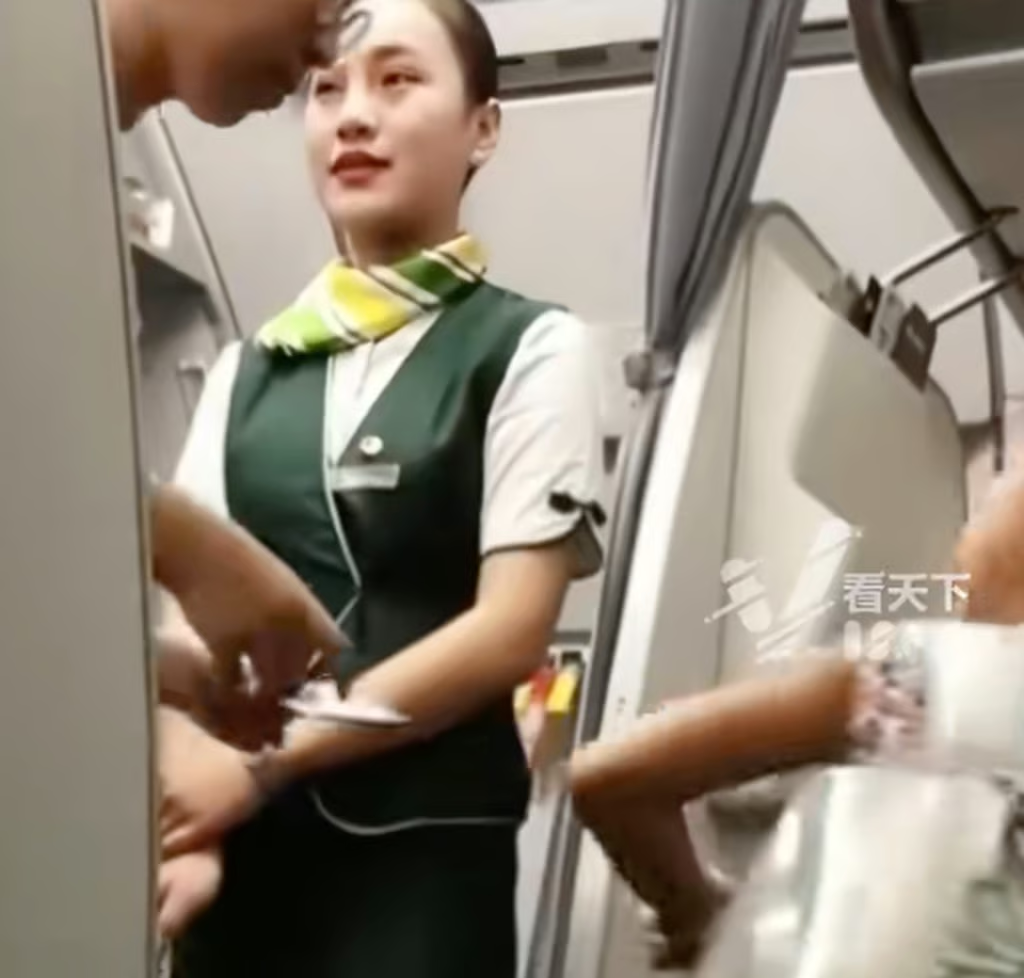
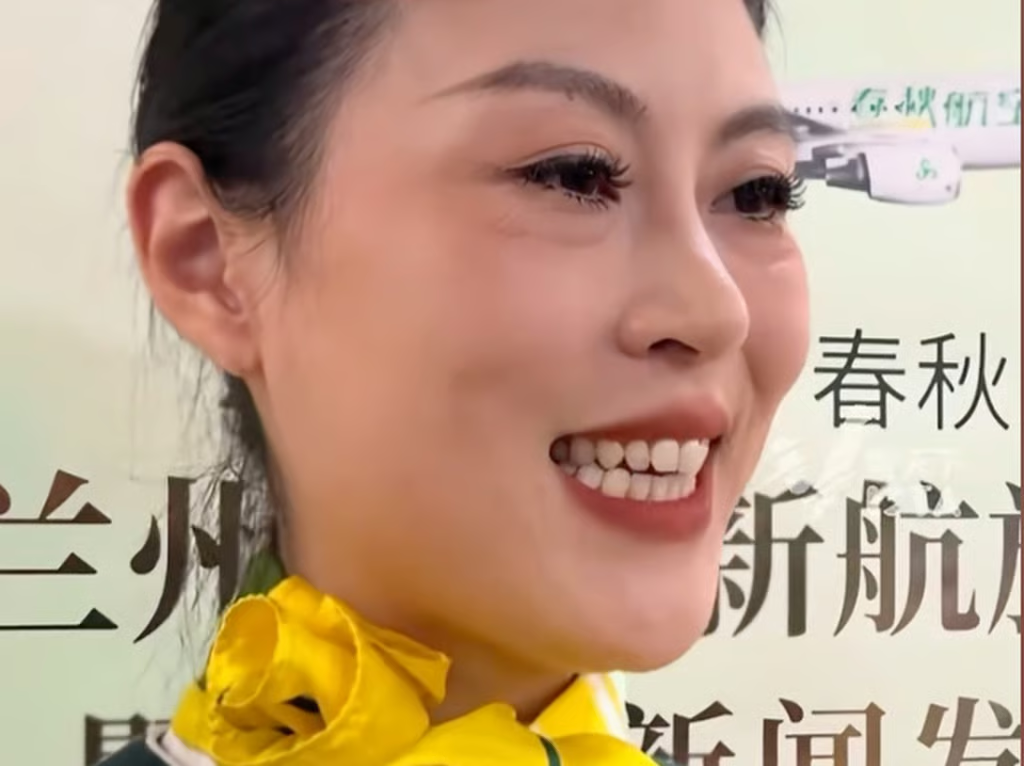
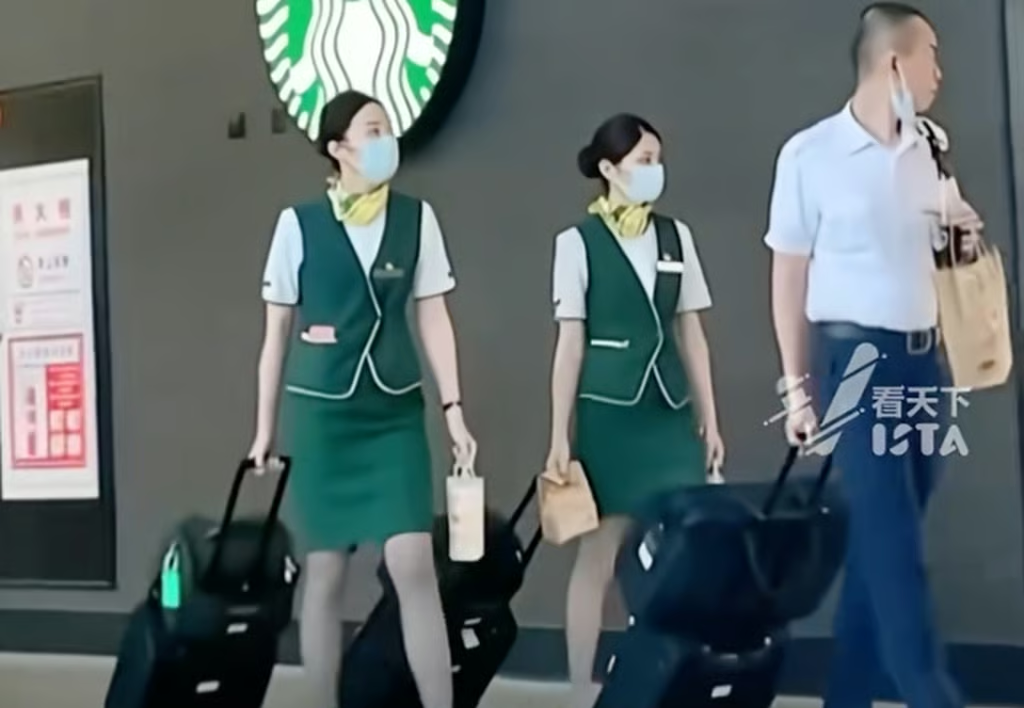
Spring Airlines, China’s first low-cost carrier, has indeed sparked significant online discussion with their recent announcement to hire married women and mothers as flight attendants, dubbing them “kongsao” or “air aunties.” The recruitment drive has generated over 64 million views on Weibo, China’s Twitter-like platform.
According to a press release from the airline, they believe these flight attendants bring “natural warmth and approachability” to the cabin. The company states that the life experience of married women and mothers helps them:
Respond to emergencies with greater composure
Anticipate passengers’ needs more effectively
Provide exceptional care to children on board
This initiative marks a significant shift from traditional industry practices, where airlines typically recruited flight attendants between the ages of 18 and 25. Some carriers had previously raised the upper limit to 28 or 32, but Spring Airlines’ extension to age 40 is unusual in the industry.
Disclaimer: Siyatra is an independent travel-information website and is not affiliated with or endorsed by any Airlines. All trademarks belong to their respective owners.
The airline plans to recruit between 30 and 60 people under this program. Currently, Spring Airlines employs about 3,400 cabin crew members with an average age of 28, and roughly 70% of them are under 30.
Public reaction has been mixed, with some praising the move as progressive:
One Weibo user wrote that instead of clinging to a “youth filter,” the company recognizes the value that married women with children can bring to the job
Others note the initiative gives working mothers renewed opportunities in their careers
The airline has explained that this recruitment strategy is designed to meet specific needs on newly opened routes to destinations like Chiang Mai and Hanoi, which serve more senior and family travelers. They believe flight attendants with parenting experience are better suited to serve these demographics, from calming crying children to helping elderly passengers.
This move comes during a time of change in the Chinese airline industry, with other carriers also updating their policies – for example, Shandong Airlines recently announced uniform changes allowing female staff to choose pants or flat shoes instead of heels.
Spring Airlines, China’s pioneering budget carrier based in Shanghai, has recently generated significant controversy across Chinese social media platforms following its announcement of a unique recruitment initiative. On October 22, the airline unveiled plans to hire what they’ve termed “air aunties” – a specific classification for female flight attendants that many online commentators have labeled as disrespectful and potentially discriminatory.
Unlike traditional recruitment practices in the Chinese aviation industry, which typically target women between 18 and 25 years old, Spring Airlines is specifically seeking female candidates aged 25 to 40 for these positions. More notably, the airline has explicitly stated a preference for women who are either married or have children, a requirement that has drawn particular scrutiny from critics concerned about workplace discrimination.
The recruitment drive aims to fill positions based in Shanghai and Lanzhou, a northwestern Chinese city. According to company representatives, they plan to hire between 30 and 60 individuals for these specialized roles. Qualified candidates must possess at least a bachelor’s degree and meet specific physical requirements, including a height range between 162 and 174 centimeters, alongside prior experience in customer service environments.
When questioned about the controversial designation and hiring preferences, a recruitment manager from Spring Airlines defended the decision in statements to China News Service. The representative claimed that married women and mothers bring valuable life experience and heightened empathy to the role of flight attendant. These qualities, according to the airline, enable them to provide superior care to vulnerable passengers, particularly children and elderly travelers.
The announcement has ignited intense debate across Chinese social media platforms, with many users condemning the term “air aunties” as demeaning to professional women in the aviation industry. Critics argue that the recruitment criteria reflect outdated gender stereotypes and could potentially violate modern workplace equality standards that many global airlines have embraced in recent years.
Industry observers note that this recruitment strategy represents a significant departure from standard practices among both Chinese and international carriers. The controversy highlights ongoing tensions between traditional gender role expectations and evolving workplace equity standards in China’s rapidly modernizing corporate landscape.
Sanjay has been a passionate travel author at Siyatra since 2023, exploring the best of over ten countries to uncover hidden gems and iconic destinations. With her rich travel experiences and expert insights, she helps readers discover the most remarkable places in every city, ensuring each journey is unforgettable."
The concept of ‘air aunties’ seems like a clever way to differentiate Spring Airlines, but I can see why some people may find the term disrespectful. It raises an interesting question about how labels can shape perceptions, even if the intention is positive.





The concept of ‘air aunties’ seems like a clever way to differentiate Spring Airlines, but I can see why some people may find the term disrespectful. It raises an interesting question about how labels can shape perceptions, even if the intention is positive.